Pairing Chocolate with Wines for Valentine!

0 comments


Wine and Chocolate pairing

As with all food and wine pairings, chocolate and wine pairing is personal, and it often comes down to taste buds. The rule of thumb when pairing wine with food or chocolate is to find foods that complement the wine rather than match it. Perhaps the best rule with wine as with chocolate, is to indulge in what you love. Be guided by pairing suggestions, but if you find a combination you particularly enjoy, go with it!

In general, the creamier the chocolate, the lighter the body of wine. The richer the chocolate, the fuller the body of the wine.  Similar to formal wine tasting, you can experiment with a varieties of chocolates. Work from light white chocolate through milk chocolate and end on the drier notes of dark chocolate with light-bodied to full-bodied wines. By starting with the more understated nuances of white chocolate and ending with dark or bittersweet chocolate, you will keep your palate from starting on overdrive and missing the subtle sweet sensations found in more delicate chocolate choices (and wine).

What is the difference between Milk Chocolate and Dark Chocolate?  Milk chocolate contains 30-40 % cocoa solids, whereas dark chocolate contains at least 60 % cocoa solids.

How do I choose the best quality chocolate? Chocolate that has a glossy surface and is free from blemishes is the best quality. If the surface is cloudy or gray, this may be a sign that chocolate is old or has been subject to extremes in temperature or handling. Be sure to read the ingredients list. Example: if a dark chocolate has synthetic vanillin rather than pure vanilla, the flavor may be altered.  


White Chocolate and Wine Pairing Suggestions: 

While white chocolate is not a true chocolate, you may still want to include it with a wine pairing. White chocolate tends to be more mellow and buttery in flavor, making it an ideal candidate for the sweeter styles wines

ü  Brachetto d’Acqui

ü  Ice wine

ü  light Sherry

ü  Moscato d'Asti

ü  Rosé Port 

ü  Sweet Rosé

ü  Tokaji Aszù

Milk Chocolate and Wine Pairing Suggestions: 

Since milk chocolate is part chocolate, part cream, it's not only delicious but versatile to pair. Milk chocolate is made from dark chocolate that has a lower cocoa solid content and higher sugar content. 


ü  Alsace Pinot Gris

ü  Champagne

ü  Gewurztraminer 

ü  Lambrusco

ü  Light Port

ü  Lighter Pinot Noir

ü  Madeira

ü  Malvasia delle Lipari

ü  Mavrodaphne of Patras

ü  Muscat

ü  Petite Sirah

ü  Riesling

ü  Sauternes

ü  Vin Santo

ü  Viognier

Dark Chocolate and Wine Pairing Suggestion: 

Unlike Milk chocolates, dark chocolates needs more attention while pairing. Dark chocolates contain more polyphenols, which gives it a bitter taste. It requires bolder strong red wines with dominant fruit or berry notes, with higher alcohol levels.


ü  Amarone della Valpolicella

ü  Banyuls

ü  Barolo Chinato

ü  Bordeaux

ü  Cabernet Sauvignon

ü  Dry Marsala

ü  Malbec

ü  Merlot

ü  Ruby Port

ü  Sangiovese 

ü  Shiraz

ü  Vin Santo del Chianti

Handmade Pici Pasta & L'aglione Sauce

0 comments


Pici Pasta 

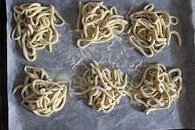
The origin of Pici pasta dates back to Etruscan times. Pici represents the essence of Tuscan Cucina Povera cuisine. Pici is very thick and irregular since they are handmade one by one. Although, there are many sauces that can be made with Pici, the classic sauce is “L’aglione, a tasty garlicky tomato sauce.


Handmade Pici Pasta

3 cups unbleached all-purpose flour
1 small egg, lightly beaten
1/4 teaspoon salt 
1 cup room temperature water, plus extra if needed 
Extra virgin olive oil and semolina flour for tossing 

Place the flour and salt in a bowl. Add the egg and stir in the water with a wooden spoon. If the dough does not gather around the spoon, add a little more water by the spoonful until a dough forms. Knead the dough for 5 minutes, or until very smooth and pliable; the dough should be somewhat soft but not sticky. Flatten into a disk and rub both sides with olive oil. Let rest, wrapped in plastic for 30 minutes or up to 3 hours at room temperature.


Rub a work counter with olive oil. Cut the dough into 1/2 inch wide strips and roll each into a long, thin rope, using the palms of your hands. Each rope should be 1/2 inch thick. Toss each rope as it is finished with a little semolina flour and place on a tray in curling nests until ready to cook (the pici can be held at room temperature, covered loosely with a dry kitchen towel, for up to 3 hours). If you find that the dough resists and/or sticks to the counter as you roll it out, rub the counter lightly again with olive oil.


Fresh Baby Tomato and Basil Sauce (My version of L’aglione)

3 tablespoons extra virgin olive oil

2 cloves of garlic, thinly sliced                                   

Salt

Freshly ground black pepper

Pinch red pepper flakes

1 pint cherry tomatoes, cut in half lengthwise   

Freshly torn basil leaves

In large skillet add the olive oil and sliced garlic; cook 30-45 seconds on medium-low heat. Add tomatoes and raise the heat to medium-high. Season with salt and peppers. Allow tomatoes to cook undisturbed for few minutes before turning. Cook 6-9 minutes more until tomatoes slightly wrinkle and some are golden. Taste for seasoning; adjust as needed. When the sauce is ready, add in the fresh basil.

Assembly

Cook the pici in boiling salted water until al dente. Strain and transfer to the skillet with sauce. Gently fold in the sauce on low heat. Top with fresh basil and serve. Serves 4.

0 comments


Regina Sesame Cookies

Elegant on the outside, simple and genuine on the inside… experience these traditional and delicious Sicilian sweets with Coffee or with a dessert wine.

Regina cookies (Sesamini)

4 cups unbleached all-purpose flour

1 tablespoon baking powder

1 pinch salt

2 sticks unsalted butter, softened at room temperature

1 cup sugar

2 large eggs

1 teaspoon vanilla extract

Zest 2 oranges

Juice of 1 ½ - 2 oranges

2 cups raw sesame seeds


1.     Preheat oven to 350F degrees. Line 2 baking sheets with parchment paper.

2.     Dry ingredients: In a large bowl, sift together the flour, baking powder, and salt.

3.     Wet ingredients: In another large bowl, add the softened butter and sugar; blend well with an electric mixer until creamy. Add the eggs, zest, vanilla, and juice of 1 1/2 oranges: blend again.

4.     Mix: Add the dry ingredients in three to four batches; continue mixing on low speed until the dough is fairly smooth. If the dough is a little dry, add a little more orange juice a little at a time and mix well. Refrigerate the dough about 20 minutes.

5.     Form: Pinch off a piece of dough and see if it forms a ball easily. Make small golf size balls first, then roll into an oblong shape, about 1 ½ inches long.

6.     Bake: Place the sesame seeds on a plate and roll the cookies into the sesame seeds, pressing them so the seeds stay on. Place the cookies on the baking sheets keeping the cookies 1- 1 ½ inches apart. Bake 20-25 minutes or until lightly browned at the bottom. Do not overbake or the cookies will be too dry.

7.     Cool, and store in airtight containers. Baking time depends on size of cookies. The sesame seeds on cookie should be slightly golden. Makes about 2 dozen depending on size.


Potato and Zucchini Polpettone for the Holidays

0 comments


Potato and Zucchini Polpettone

An easy and tasty side dish that can be prepared ahead and baked right before serving. It’s a versatile dish that can be made with cooked zucchini, spinach, or even asparagus. I serve it instead of the regular mashed potato dish. 

4 medium golden potatoes, unpeeled

1 large egg, lightly beaten 

1 small zucchini, small dice or grated

1 celery stalk, minced 

1 medium red onion, grated

½ - ¾ cup grated parmesan cheese

¼ teaspoon ground nutmeg

Salt and black pepper

Breadcrumbs as needed

1-2 tablespoons extra virgin olive oil

½ - ¾ cup sharp Provolone and or fontina cheese (or Gruyere), small dice

2-3 tablespoons minced Italian parsley


1.      Preheat oven 375F. Line a baking sheet with parchment paper. Drizzle olive oil on surface.

2.      Place the potatoes in a large pan in cold water, boil until tender. Cool slightly, peel and mash.

3.      In a large skillet add 1 tablespoon of olive oil and onion, cook until soft and barely golden. Add the zucchini and celery; cook until barely golden adding more oil if needed. Season with salt, pepper, and nutmeg.

4.      Once the mash potatoes are cool, add the egg and season. Add the parsley, grated cheese, diced cheese, and little breadcrumbs to firm everything. Mix well before adding more breadcrumbs. Test the mixture by forming a meatloaf shape.

5.      With slightly damp hands give the potato mixture the shape of a meatloaf. I like to divide mine in two smaller loaves. Place on the baking sheet; drizzle a thread of olive oil on top and sprinkle lightly with breadcrumbs. Be sure to press it down.

6.      Bake about 30 minutes until just golden.


La Carbonara Pasta

0 comments


Alba’s Spaghetti Carbonara Traditional Recipe -Spaghetti Carbonara is one of the most famous Pasta Recipes of Roman Cuisine, made only with 6 simple ingredients: spaghetti, guanciale (or Pancetta), freshly cracked black pepper, freshly grated Pecorino Romano, beaten yolks, and pasta water. All the ingredients must be of high quality to achieve a successful recipe. No garlic, no onions, no herbs, and no olive oil please!

The history of carbonara is relatively recent, and its origins are controversial, also because there is no written trace of it, or text of Italian or Roman cuisine that speaks of it. According to a first theory, Carbonara was born in 1944, during the Second World War, in a trattoria in Vicolo della Scrofa in Rome. According to another theory, the Carbonara would be the evolution of an ancient dish: "Cacio e Ova", that is, cheese and eggs, a dish prepared by the Carbonari when they went to the woods to make coal.

There are a few simple techniques to make a perfect Carbonara that I will point out.


La Carbonara

1 pound spaghetti

6 ounces of diced guanciale or diced pancetta

4 medium egg yolks, lightly beaten

1 ¼ cups freshly grated Pecorino Romano

Freshly cracked black pepper

Pasta: In a large pan boil water with 2 tablespoons of salt. When the water comes to a full boil, add the spaghetti. Stir for about 30 seconds so the pasta doesn’t stick. Cook until the pasta is al dente.  Remember before straining to save 1 ½ cups pasta water.

Eggs and cheese: While the pasta is cooking, place the yolks in a bowl and lightly beaten the yolks. Add the fresh grated cheese and mix together to form a paste.  Then scoop one ladle full of cooked pasta water into this bowl and quickly mix.  This is called tempering; it will prevent the egg yolks when added to the pasta to curdle.

Finishing the Sauce:

o   Put the guanciale or pancetta in a large skillet and cook until barely golden. Cook on medium heat.

o   Reserve your pasta water before straining. When the pasta is ready, transfer the pasta to the skillet with the guanciale or pancetta. Continue to cook on medium heat, Fold and mix well until the pasta is well coated.

o   Remove the skillet off the heat: Add the cheese and yolk mixture and quickly mix and fold to coat the entire pasta.  Add a ½ ladle of pasta water and mix again. If needed add ½ ladle of pasta water and mix and fold the pasta until just barely creamy. Lastly add freshly cracked black pepper.

o   Serve warm with more freshly cracked black pepper and a sprinkle of Pecorino grated cheese. This pasta is meant to be eaten right away. Enjoy it!

0 comments

Pasta Al Profumo di Arancia 


Oranges are the coming together of two fruits, the pomelo fruit, and the mandarin. Oranges are native to China grown as early as 2,500 BC. When the Arabs conquered Spain in the 8th century they introduced oranges. Later they were introduced into Italy. In the 16th century, Spaniards took oranges to the Americas.  It was the Spanish Missionaries, and the Franciscans who began planting orange orchards in Arizona and California. Florida eventually became a big grower due to favorable conditions.

 What about the orange skin, the zest? 

The skin of the orange contains three times the vitamin C compared to its pulp.

Zest of orange is widely used in Italian recipes. Orange zest can be used to give an extra touch of flavor, and a different scent or aroma to everyday dishes. Of course, only the orange part of the peel (zest) should be used, because the white part has a bitter taste. The most common use for orange zest is to add it to cakes, custard, salads, pasta dishes or risottos, on fish or seafood, stews, in salted sauces or sweet creams, and tea infusions. The only time the orange and white part of the orange skin is used is to make a delicacy of candied the orange rinds.  

Here is one of my favorite recipes to make with orange zest and juice, “Pasta al Profumo di Arancia”. I hope you will enjoy it as much as I do.

Pasta al Profumo di Arancia There are endless preparations for pasta dishes.  I love to vary and experiment with new combinations or ways to present it. This is a simple, aromatic, and delicious dish, ideal to prepare for an improvised dinner or for a holiday.

Pasta al Profumo di Arancia

½ pound Tagliatelle or Parpadelle pasta 

1 tablespoon extra-virgin olive oil

1 tablespoon unsalted butter

1 medium shallot, finely minced

Zest in strips of 2 organic oranges (julienne style)

Juice 1 organic orange

4 fluid ounces heavy cream

Salt, freshly cracked black pepper, red pepper flakes

Minced Italian parsley for topping


1.        Cook the pasta according to package directions in salted boiling water. Reserve ½-1 cup of pasta water right before draining.

2.        Cut the orange peel into thin strips, avoiding the white part because it is bitter.

3.        In a large skillet, and the olive oil, butter, and shallot on low heat. Cook until the shallot is just golden.  Add the orange peels and cook 1-2 minutes until softened. Raise the heat to medium-low and add juice of 1 orange, cook until reduced by half.

4.        Add the cream and ½ cup of warm pasta water.  Cook 5-8 minutes until well blended and creamy.

5.        When the pasta is ready and drained, add to the skillet with the sauce and mix well. If too dry add a little more pasta water a few tablespoons at a time. Finish with lots freshly cracked black pepper and minced Italian parsley on top.


Procello e Gelato

0 comments


Limoncello is usually enjoyed as a digestive, at the end of the meal, but it can also be served as an aperitif.  The origins of limoncello are unclear; the authorship of the recipe of this famous liqueur is, in fact, contested between three splendid places in Campania; Amalfi, Capri and Sorrento. These places are famous because of the abundance of fragrant lemon trees and for a production of Limoncello handed down for generations. There are several popular stories and legends that tell the birth of this famous liqueur.


The origins of limoncello date back to the early 1900s, in a small guesthouse on the Azure Island of Anacapri. On this island Mrs. Maria Antonia Farace cared for a garden rich in lemons and oranges. A relative opened a catering business and presented Limoncello as the specialty of the house made with the ancient recipe of the grandmother. Later a small artisan production of Limoncello was registered as a brand. Also simultaneously, in Amalfi and Sorrento were born the first legends and the first stories about the traditional production of this famous yellow liqueur. The story in fact tells that the great Sorrento families never let guests miss a taste of the then experimental limoncello. In the city of Amalfi there are even those who claim that the origins of limoncello are even older.

This legend tells that limoncello was used by fishermen and peasants especially in the morning to fight the cold. Finally, there are those who claim that the first recipe was born inside a monastery to delight the friars between prayers. Beyond all these narratives, limoncello has now become a pride of Campanian and Italian culture. Furthermore, in order to defend against imitations, its name has been guarded by the Protected Geographical Indication (PGI). Therefore, the real and original limoncello is the one produced in the Sorrentino territory and only in some areas of Campania.

The success of an impeccable limoncello lies precisely in the quality of lemons that, on the Amalfi coast, abound and are characterized by large dimensions, an elliptical shape, a wrinkled, thick, fragrant, and bright yellow skin. The skins are rich in essential oils that give limoncello its scent and unique and decisive taste. It’s important to pick the first

flowering lemons because they are richer in flavor, collected preferably at dawn when the scents are more concentrated. Limoncello is made with untreated lemon peel whose alcohol content ranges between 20% and 32% vol. A sweet liqueur, with a characteristic yellow color, which is obtained by letting the lemon peels macerate in pure alcohol with the addition of a syrup based on water and sugar.


Prosecco is one of the most loved Italian white wines in the world. Suitable for celebrating important holidays and occasions, Prosecco is today considered an excellent accompaniment for any meal, thanks to its fruity aroma and slightly sweetened flavor. Prosecco owes its name to a small town near the city of Trieste where it is grown, and the former name of the region's primary grape variety. The main grape used to make Prosecco is a white grape called Glera which gives Prosecco its characteristically fresh and aromatic flavor. A thin-skinned green grape grown in the Veneto and Friuli regions of northern Italy for hundreds of years. The Glera base wine may be mixed with a small quantity of other grape varieties to give further complexity to the final product. All Proseccos must be at least 85 per cent Glera grapes blended with other local grape varieties such as; Verdiso, Perera, and Bianchetta, or even Pinot Bianco, Pinot Grigio or Chardonnay. Most Proseccos are blends, but after a really exceptional harvest some winemakers produce ‘pure’ Prosecco, made from 100 per cent Glera grape.

Prosecco sparkling wine may have only been catapulted to fame in recent years, but it has a history going back many hundreds of years. North Eastern Italy has produced wine for millennia and many of its vineyards were already well established when the area was colonized extensively by the Greeks around 800 BC. The Glera grape is believed to be of Slovenian origin and was probably cultivated in the vineyards of the Italian village of “Prosecco” in Trieste which shares a border with Slovenia. It is believed to have been referred to by the Romans of the area, as far back as 200 BC, as “Pucino”. The first documented mention of Prosecco comes in a poem written in 1754 by Aureliano Acanti.

On the nose Prosecco has fruity and floral notes; in the mouth it is dry and decisive, excellent to taste with antipasti of prosciutto, salami, and cheeses. Prosecco can also be used to make cocktails, to cook savory dishes especially risotto, and to be enjoyed as is.

Limoncello and Prosecco are always available in my refrigerator.  I love to experiment using them in savory dishes and sharing these dishes with my students or clients. Here is a simple drink or it can even be considered a dessert that can be made any time of the year. I have named it “Procello e Gelato”, enjoy it!


Procello e Gelato

1½ ounces Limoncello

3 ounces Prosecco

1 scoop of lemon gelato or Sorbet

1 slice lemon

Sugar for garnish, optional

Prepare sugar rim by rubbing the rim of a chilled martini glass with lemon juice, then dipping it in sugar.

Scoop the gelato or sorbet into chilled glass.  Add a shot of Limoncello, and slowly top with prosecco. Serve with a spoon.

Blog Archive

 
  • Cooking Chef Show © 2012 | Designed by Rumah Dijual, in collaboration with Web Hosting , Blogger Templates and WP Themes